Task-Conditioned Scene Graph
Builds a Task-Conditioned Scene Graph (TC-SG) — picking or synthesizing the right spatial ontology before it maps. The map is a function of the task, not a fixed universal schema.

the Joints builds task-shaped spatial understanding on the fly — and adapts the instant the world changes. No universal map to maintain, no stale world model to fight.
Task-Conditioned Scene Graph NavigationA short look at how the Joints turns a natural-language task into a lean, task-shaped world model — running a fast safety loop on the robot and deep reasoning in the cloud.
the Joints sits between perception and action — it decides what to understand, builds only that, verifies before it commits, and keeps the robot safe throughout.
Builds a Task-Conditioned Scene Graph (TC-SG) — picking or synthesizing the right spatial ontology before it maps. The map is a function of the task, not a fixed universal schema.

Detects and grounds objects it was never explicitly trained on, fusing detection, segmentation, and captioning into the live scene understanding.

Change detection updates the world model as the environment shifts; the planner re-plans on the fly instead of acting on a stale snapshot.
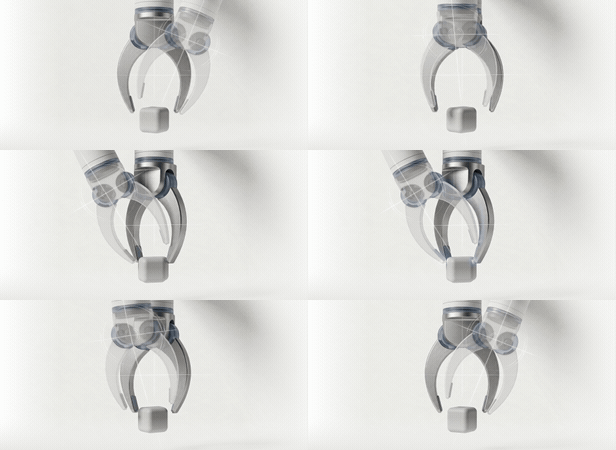
Confidence gating, grounded retrieval, and visual verification mean the robot abstains and re-checks rather than acting on a confident guess.
A lightweight safety loop runs continuously on the edge — the robot stays safe and moving even if the cloud link drops. Heavy multimodal reasoning runs only when something new happens, which is what makes foundation-model intelligence affordable at fleet scale.
The same intelligence layer adapts to each robot and each task through reusable schema templates — so every deployment gets focused, accurate navigation, not a bloated general-purpose map.
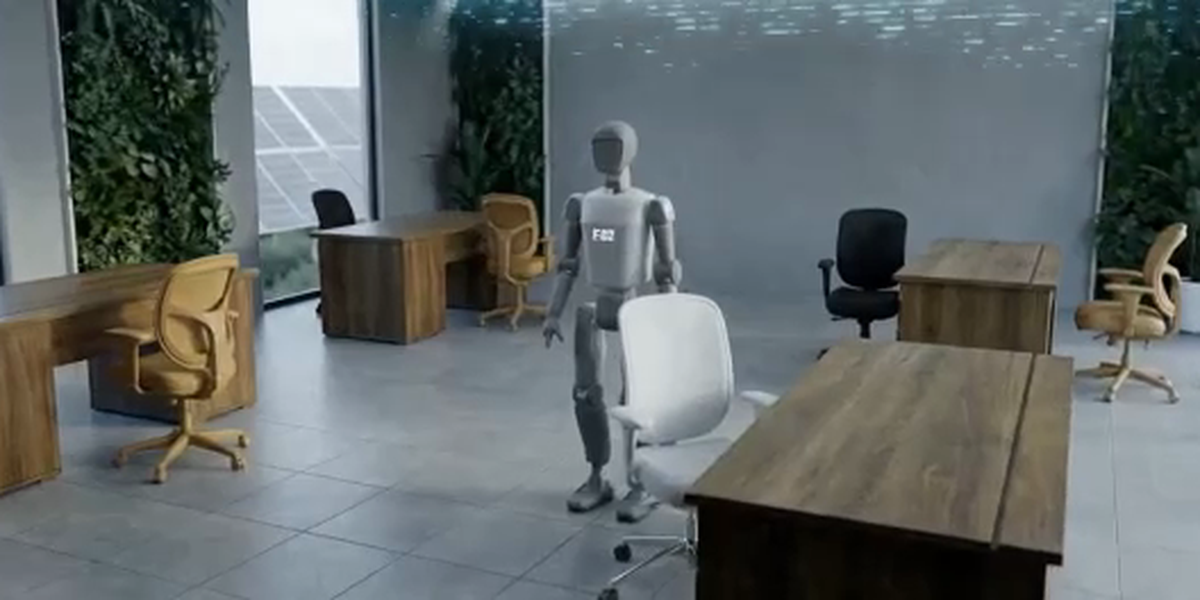
Routine patrols of warehouses, substations, and construction sites. The robot maps only persistent infrastructure, flags anomalies, and adapts to what's changed since the last sweep.
Integrate the awareness layer and keep your own action policies closed. the Joints gives you deployable navigation intelligence without rebuilding spatial reasoning for every new environment.

Detects and grounds objects it was never explicitly trained on, fusing detection, segmentation, and captioning into the live scene understanding.

Indoor service, factory patrol, search-and-rescue — a new client scenario is a new schema template, not a new mapping system to build from scratch.

Runs as a split edge/cloud stack: an always-on safety loop on Jetson-class hardware, event-triggered reasoning on an autoscaling GPU cluster.

Action allow-lists, a safety governor, sandboxed execution, and an immutable audit log bound what a robot can physically do in the field.
Give your robots real-world judgment with